Those Effing German Endings

Useful foreign-language texts are good to find — I recommend library discard sales, where you can find great stuff for 50 cents or less. You can buy 300 of these for the price of a required text that you’re still paying for decades later. Actually, I spied a personal favorite: The World’s Writing Systems this way (see photograph below)

the-worlds-writing-systems
A 50-cent purchase

I lived an iconoclast’s dream for 20 years: a Saturday German class (10 to 12:30) to design a better way to learn German at the TriState German-American School: TSGAS. Our principal was happy if the students were happy. I have saved many lesson plans over the years — some of it archived from a Commodore 64. All four cases and all four genders — German handles plurals the same way as its three genders, it’s basically a fourth gender. And all by Thanksgiving holiday.

Had you elected the three-year sequence and its college textbook you wouldn’t learn about Genitive case until the third year. I don’t think you should wait that long. There are many misbegotten German textbooks out there: I found one that didn’t cover the second-person familiar until the second half of the book. How are you supposed to patch that in?

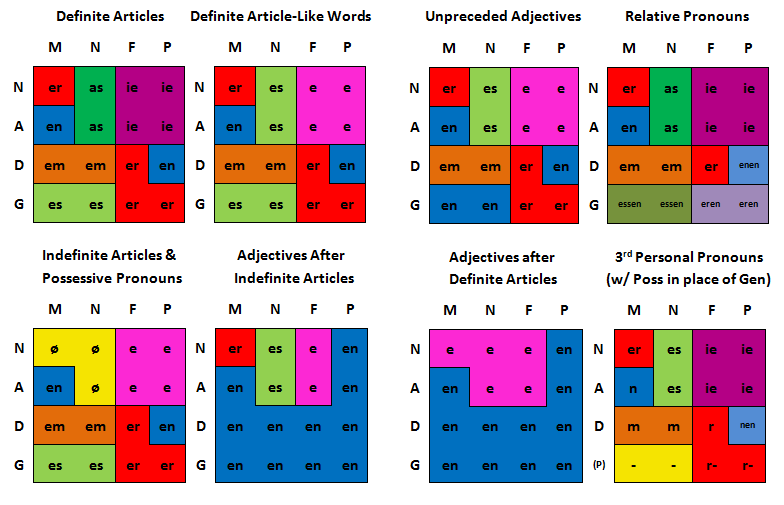
Paradigms are only useful if they are intuitive, and part of a wider heuristic. I am placing a link to an image of a very bad set of paradigms IMO rather than the actual image here because WordPress randomly selects images to accompany posts.

Learning German the same way that Germans learn English doesn’t work in the long run.  Actually it doesn’t work in the short run either, as I’ve learned from personal experience. Sometimes you just have to blast away the fossilized crud that accreted in your brain. Out damned crud!

Inflection is a big deal in highly inflected languages. Ignoring that big deal does not make the inflections go away. The problem only becomes larger if you do not tackle it.

inneren.schweine.hund

Translation: “Overcome the lazy dog inside you. What I learned from a marathon runner.”

The Saxons who invaded Britain brought all those inflections with them, but then the Vikings showed up and made short work of it. ’twas the birth of “The” and the need to use word order to indicate the function of each noun.

One of the first native German speakers my ears encountered in a Frankfurt of 1971 came from a five-year-old child. This Kindergärtners command of complex inflection was free and accurate. Was it some kind of trick? Were there paradigms on the refrigerator, or hanging from a mobile above his crib in 1968? The words flowed as intuitively much as that cat in the late Jack Ziegler (no relation) cartoon:


jack.ziegler.cat

German Gender

Gender is not extraneous.

Most aids for learning gender suggest patterns for masculine nouns first. Don’t do that, feminine nouns are easier to learn than masculine nouns. Here is your handout:
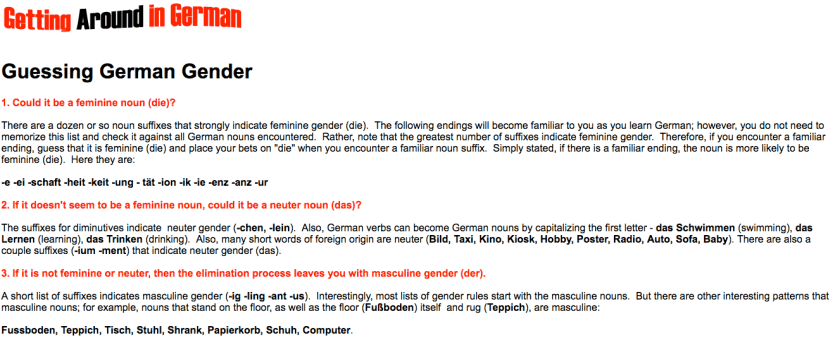
Screenshot 2017-04-04 20.55.54

IMO it is better than the suggestions you’ll find in standard German textbooks, i.e. masculine first. So I say turn it upside down:

  1. Is it a feminine noun?
  2. No, then is it a neuter noun?
  3. In all probability it’s a masculine noun.

Am I the only German teacher who has noticed this cart in front of that horse?

Here is an exercise for practicing effing German endings at the dinner table. Unroll die Serviette and discover that spoon, fork and knife are, respectively masculine, feminine and neuter nouns — right there on the table. I’ll leave the plural forms for die Hausaufgabe (homework).

Screenshot 2017-04-04 19.14.55

By this point I have probably lost all but two of my readers. Thanks, you two — I am grateful 🙂

Now comes case in a nutshell:

  • Nominative signals subject, the gender you’ve just learned how to learn. Think four genders. You are 25% of the way there.
  • Accusative case differs from nominative only with single masculine nouns — the letter ‘n’ is a single vertical line away from ‘r’. All the others are the same as the nominative: die, das, die. You are halfway there.
  • Dative case — you are halfway to dative by realizing that the letter ‘m’ appears only with dative case nouns (masculine and neuter). You are three-quarters to the finish line.
  • Genitive case — masculine and neuter again: the ‘s’ you already know from English.

So you are left with the odd stragglers that now stand out in that 16 cell paradigm — the ‘der’ and the ‘den’.

Screenshot 2017-04-04 19.18.28

A takeaway: heuristics are fun, paradigms need context and a deliberate design. Here are some reasons:
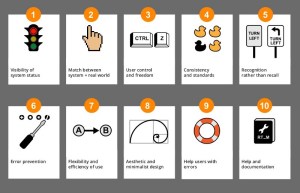
heuristic

More to follow if you two readers are interested 🙂

Older posts on German language

Thanks for reading.


Question Mercatorian Authority


In 1974 German cartographer Arno Peters developed a projection that ignited a firestorm by introducing a map that far more accurately portrays land-area distribution on planet Earth.

Listen Bill, firestorms hurt innocent people. It’s not nice to start fires; however, if we may say one good thing  about firestorms: they just might melt the snowflakes who start them.


do_not_question_authority_by_graffitiwatcher

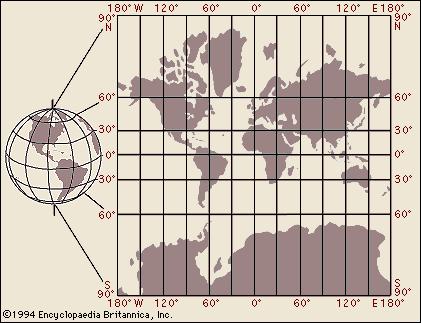
All projections are approximations — you peel the surface of a sphere and press the peels onto a two-dimensional surface. Each attempt compromises something, but that god-awful Mercator (invented in the year 1569) compromises everything except convenience for sextant users in the year 2017.

The higher the latitude, the more profound the misrepresentation. Now what value could that have for propagandists? None I guess.

There must be something worthwhile in a technique that has survived 500 years of history, Bill. We think you have too much time on your hands. Watch some March Madness, Bill.

Yesterday my son turned me on to Cartographers for Social Equality — a cult classic from The West Wing episodes.

Bill, this sounds like something you could put on a business card to alert the innocent of the foolish views that seem to stick in your craw. Can we help you get the help you need?

WordPress uses the Mercator for data analytics by country.  Canadian and Russian visitors make me feel globally successful, simply by dint of all that map-shading.

I’m still waiting for visitors from Grønland (grøn is Danish for green). For no reason at all let me tell you that the German for green is grün.

Stay on task. Do your job. Sit down and shut up. Capiche?

What of those massive islands in Northern Canada? They are actually tiny islands. Take a look at a globe the next time you’re in a furniture store. Observe how the lines of longitude join at the North and South Poles —those antipodes are infinitely distant from the Equator. Literally. Only the places close to 0º depict areas accurately — the North Pole on a Mercator is as impossible to reach as the mythical elvish workshop.

mercator.brittanica

Geography glommed many generations ago into a mash-up called branches of social science. In effect a spattering of soundbites in an already watered-down curriculum.

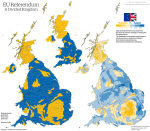
Here are two of many remarkable cartograms by Benjamin Hennig that you can access on his website: viewsoftheworld.net. You can directly compare area and population density for the insight that this brings — if you’re into this kind of thing.

USelection2016Cartogram

We’re not ‘into’ things. We’re on to things — we’re on to you.
The map on the right resembles a vascular circulatory system, doesn’t it? Perspective matters perhaps.
EUreferendumCartogram
Read Hennig’s blog for more cartograms that portray other dynamics at play.

The Guardian published an annotated series for comparing map projections in 2009.

Why reinvent something that Mercator already settled 500 years ago? But you have to be different, don’t you?

Thanks for reading.


Sid Caesar — A Language for all Seasons

Sid Caesar died in 2014 at age 91. A pioneer in the gentler arts of subtle humor, Caesar approached his craft with an inquisitive spirit and intellectual curiosity — you can’t do that without patience and discipline. He listened to rhythms and song, he could mime anything animate or inanimate. Though able to transmit the theater of language, his only two tongues were English and Yiddish.

sid-caesar

All languages are indeed songs. Iambic pentameter is, quite simply, the cadence of spoken English. In my opinion a haiku never sounds right in English because the Japanese haiku does not transplant well in foreign soil.

From the Caesar, not the one known for “Gallia est omnis divisa in partes tres”:

“I didn’t allow cue cards because, to my mind, when you’re acting with someone you listen when they speak, … Because then you can push off not just what they say but how they say it. You don’t just hang around waiting for your cue.”

Translation is a gentle art,  all translations are rough estimations. Something is always lost in the translation. In the hands of the demagogue language is a weapon to leverage propaganda. Agendas render translations that wish to mislead — always, or at least often enough.

Poetry resists translation intensely. But that is as it should be — poems are distilled language, translation muddies and soils.

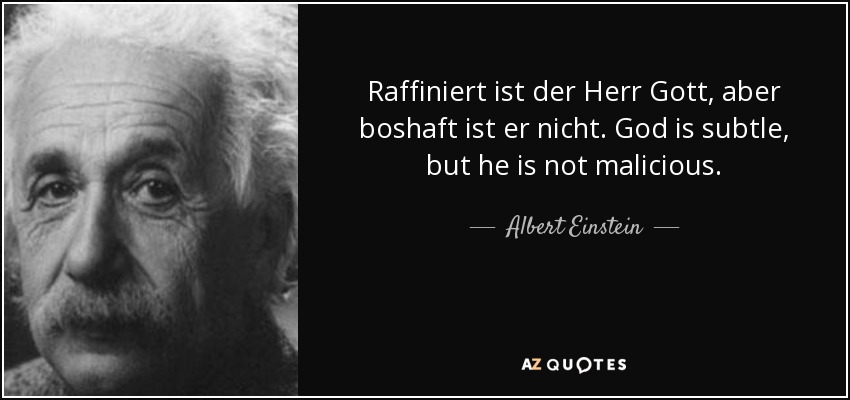
quote-raffiniert-ist-der-herr-gott-aber-boshaft-ist-er-nicht-god-is-subtle-but-he-is-not-malicious-albert-einstein-90-85-72

By my own estimation an oft repeated remark by Albert Einstein is not a good enough translation of the German. A wise man once hadn’t said…

The German:  Raffiniert ist der Herrgott aber boshaft ist er nicht

The most common render: Subtle is the Lord, but malicious he is not.

A single word change: Mischievous is the Lord, but malicious he is not.

I think it’s good alliteration. Well, I may be outnumbered, but isn’t it an improvement on the more clumsy subtle/malicious. Perhaps I’m guilty of some degree of bias when taking sides with my own blog. With a nod to a rare public voice (hint: Habemus papam — “who am I to judge.”)
2-saints-from-palestine
Movements to excommunicate — or at least exile — Pope Francis are loud, vociferous and growing with brute fervor.
Listening patiently is among the lost arts. The sentient fellow-being in your presence deserves your attention — it’s that breathtakingly short moment when they may reach and teach you. Carpe diem!
Okie dokie, let’s consider another quote from Mr. Caesar:
The remote control changed our lives, … The remote control took over the timing of the world. That’s why you have road rage. You have people who have no patience, because you got immediate gratification. You got click, click, click, click. If it doesn’t explode within three seconds, click click, click.
~ Sid Caesar (from Successories)
When it comes time for you to speak, do not use your words as weapons but as tools for removing barriers, widening perspectives and sharing a planet where homo sapiens is the sole responsible specie threatening to drop another extinction event on all and each.
 Be also wary of weaponized symbols and icons, my impertinent opinion of course.
Thanks for reading.

We’re Just Out Of Waldorfs

Some decades ago, in another millennium, I learned how to teach German language at the Cincinnati Waldorf School — by learning to flow smoothly.

waldorf-painting-turtle

Waldorf pedagogic method follows the thought and moment of Rudolf Steiner.

We’re still here, Bill. And we have a question. Is there a difference between pedagogic and pedantic? By the bye, we are bored.

Yes, there is a difference. My apologies for the tedium that now threatens tedia.

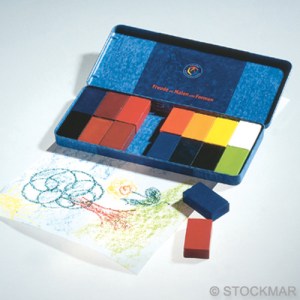
Each student had this blank book and a set of block crayons.

stockmar-beeswax-crayons-16-blocks

A fine point between  a pointed crayon and a block crayon. Boundaries are the literal point of a more muffling model. Art, dance, theater and connection to the Earth. Veganism was the norm, as it should be.

You have a gift for wandering off task. Do you know that?

The German for poison is das Gift. Snow White (Schneewittchen)  bit into a gift from a person of some political moment. The gift was Gift. On a side note — where I prefer to spend my time — you can frequent souvenir shops all over the place called: Das Gift Haus. Caveat emptor!

Bilingual puns are the death of wit, an affront.

Some few years ago, between 1989 and 2013, I enjoyed another singular privilege: teaching at the TriState German-American School. It’s a local institution that arose from a large number of emigrees to Cincinnati, arriving from German-speaking countries.

Pedantry alert. Pedantry alert.

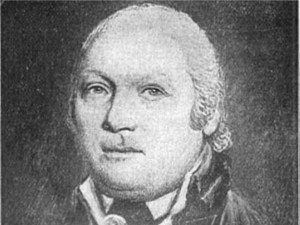
The TGAS principal did not impose a curriculum on my class “Getting Around in German.” If the students were happy she was happy. My students were happy. This happy happenstance allowed me room (did you know that the name Zimmerman arises from the German ‘Room Man’ for carpenter. A Ziegler lays tile. The first mayor of Cincinnati was David Ziegler.

david-ziegler

My green italic critics shift nervously on respective chairs.

You stray like a thief in the night, Herr Ziegler. These Pults are a horror.

God save us from the prison that the Prussian system of student control imposes. Just my 7 1/2 cents.

From Fawlty Towers: “I want a Waldorf Salad.” Fawlty: “I think we’re just out of Waldorfs.”

fawlty-out-of-waldorfs

It’s quite a comfort to holiday at the Fawlty Towers. Let’s listen in on a few fellow guests recently arrived from Deutschland.

“We didn’t start it. Yes you did, you invaded Poland.”

But to return to something completely different, I developed a number of techniques in my Saturday German class that offered a more gentle way in my lesson un-plan. I introduced concrete objects without recourse to the succor of English.

Point at the sun, define a circle with your fingertips. The sun is big. She is yellow. She is big, round, yellow and hot. How can you remember that something is round — leave the round part “o” out, and so rund.

Two favorite verses did I glean from Waldorf and refresh in my class:

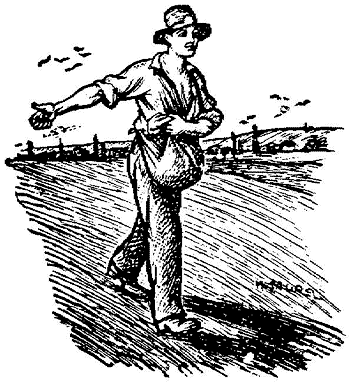
Hutsch He! Hutsch He! Der Ackermann sät.

The classroom floor became a plot of land to sow in Spring. In Autumn (Herbst/harvest) that same floor became a field of wheat that flowed with the wind and became ready for harvest.

Hutsch He! Hutsch He! Der Ackermann mäht. 

Use the same arm movement used for sowing the seeds, but then suggest a scythe that cuts the grain and readies it for baking bread.

sowing

Spring to Fall   —sät to mäht.

Thanks for reading.