Those Effing German Endings

Useful foreign-language texts are good to find — I recommend library discard sales, where you can find great stuff for 50 cents or less. You can buy 300 of these for the price of a required text that you’re still paying for decades later. Actually, I spied a personal favorite: The World’s Writing Systems this way (see photograph below)

the-worlds-writing-systems
A 50-cent purchase

I lived an iconoclast’s dream for 20 years: a Saturday German class (10 to 12:30) to design a better way to learn German at the TriState German-American School: TSGAS. Our principal was happy if the students were happy. I have saved many lesson plans over the years — some of it archived from a Commodore 64. All four cases and all four genders — German handles plurals the same way as its three genders, it’s basically a fourth gender. And all by Thanksgiving holiday.

Had you elected the three-year sequence and its college textbook you wouldn’t learn about Genitive case until the third year. I don’t think you should wait that long. There are many misbegotten German textbooks out there: I found one that didn’t cover the second-person familiar until the second half of the book. How are you supposed to patch that in?

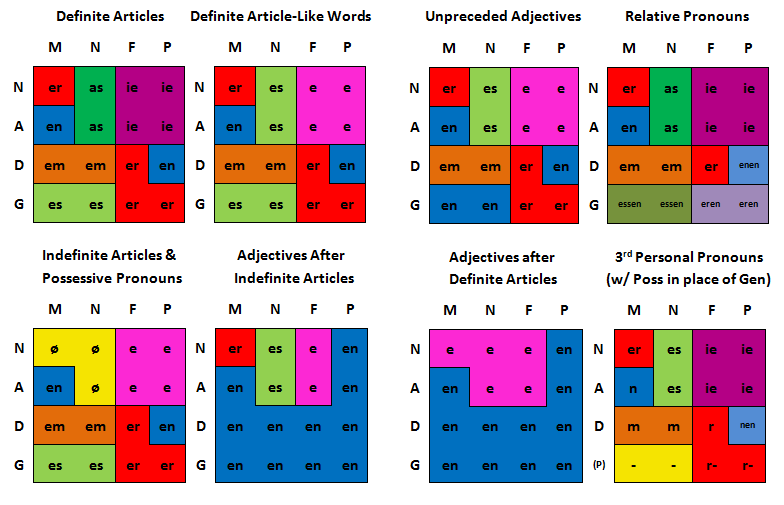
Paradigms are only useful if they are intuitive, and part of a wider heuristic. I am placing a link to an image of a very bad set of paradigms IMO rather than the actual image here because WordPress randomly selects images to accompany posts.

Learning German the same way that Germans learn English doesn’t work in the long run.  Actually it doesn’t work in the short run either, as I’ve learned from personal experience. Sometimes you just have to blast away the fossilized crud that accreted in your brain. Out damned crud!

Inflection is a big deal in highly inflected languages. Ignoring that big deal does not make the inflections go away. The problem only becomes larger if you do not tackle it.

inneren.schweine.hund

Translation: “Overcome the lazy dog inside you. What I learned from a marathon runner.”

The Saxons who invaded Britain brought all those inflections with them, but then the Vikings showed up and made short work of it. ’twas the birth of “The” and the need to use word order to indicate the function of each noun.

One of the first native German speakers my ears encountered in a Frankfurt of 1971 came from a five-year-old child. This Kindergärtners command of complex inflection was free and accurate. Was it some kind of trick? Were there paradigms on the refrigerator, or hanging from a mobile above his crib in 1968? The words flowed as intuitively much as that cat in the late Jack Ziegler (no relation) cartoon:


jack.ziegler.cat

German Gender

Gender is not extraneous.

Most aids for learning gender suggest patterns for masculine nouns first. Don’t do that, feminine nouns are easier to learn than masculine nouns. Here is your handout:
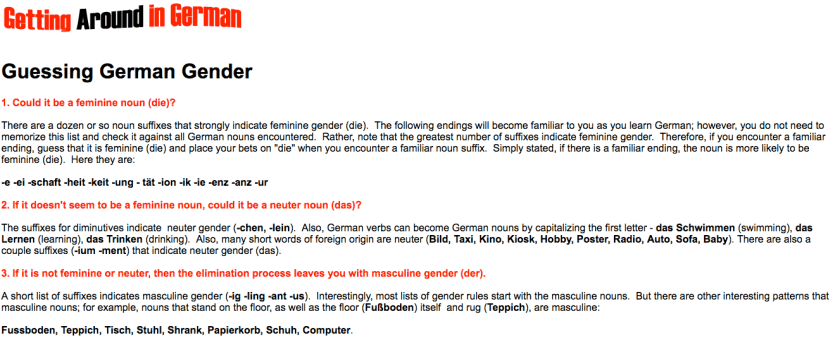
Screenshot 2017-04-04 20.55.54

IMO it is better than the suggestions you’ll find in standard German textbooks, i.e. masculine first. So I say turn it upside down:

  1. Is it a feminine noun?
  2. No, then is it a neuter noun?
  3. In all probability it’s a masculine noun.

Am I the only German teacher who has noticed this cart in front of that horse?

Here is an exercise for practicing effing German endings at the dinner table. Unroll die Serviette and discover that spoon, fork and knife are, respectively masculine, feminine and neuter nouns — right there on the table. I’ll leave the plural forms for die Hausaufgabe (homework).

Screenshot 2017-04-04 19.14.55

By this point I have probably lost all but two of my readers. Thanks, you two — I am grateful 🙂

Now comes case in a nutshell:

  • Nominative signals subject, the gender you’ve just learned how to learn. Think four genders. You are 25% of the way there.
  • Accusative case differs from nominative only with single masculine nouns — the letter ‘n’ is a single vertical line away from ‘r’. All the others are the same as the nominative: die, das, die. You are halfway there.
  • Dative case — you are halfway to dative by realizing that the letter ‘m’ appears only with dative case nouns (masculine and neuter). You are three-quarters to the finish line.
  • Genitive case — masculine and neuter again: the ‘s’ you already know from English.

So you are left with the odd stragglers that now stand out in that 16 cell paradigm — the ‘der’ and the ‘den’.

Screenshot 2017-04-04 19.18.28

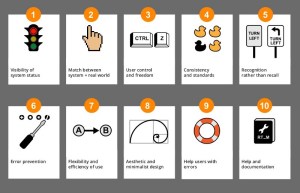
A takeaway: heuristics are fun, paradigms need context and a deliberate design. Here are some reasons:
heuristic

More to follow if you two readers are interested 🙂

Older posts on German language

Thanks for reading.


Read by Number or Color by Number?

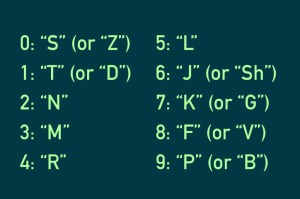
Before nano-processors in your pocket did all the memorizing for you, back in 1974, a fad whispered and died before anyone knew it existed — memorizing numbers for profit and fun. I wasn’t interested in fun and profit, nor in memorizing my mother-in-law’s phone number,  but I was interested in reading numbers. To cut to the rabbit hole, the concept piqued an interest that is still peaking..

Parlor tricks interest me less than basketball in a mad enough March.

Any of the way, it’s formally known as the Major System.

Bill, you major in minor interests don’t you?

You are correct, Sir. The more arcane and uninteresting the endeavor, the more profound my fascination.

Let’s say you have trouble remembering an all-important number — such as 42.

The sound of a 4 is R. The sound of a 2 is N. RN ran Iran ron run rune rain

Major-System

But what if you need to remember your towel and don’t have a word/number number/word dictionary at hand. Problemo No-o. W counts as a consonant in Arabic, but not in the language of System-Major.

Identify two (2) consonants — T and L. T sound denotes 1. L sound denotes 5.

15

Vowels are not explicitly expressed, so choose the consonantal combo that works for you.

Now turn your word-number/number-word dictionary upside down and look up the number 15. What have we there? What have we?

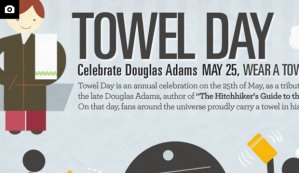
towel.day

Let me explain something — the number 1 can be a T, the number 1 can be a D. This is something I call the Ta Da phenomenon.

But Bill, does this have anything to do with German language?

Of course it does. When I taught German (a lot) it seemed important to invent a hokey-butt theory to explain similarities between German and English. My theory posits that the original Saxons, on their way to the British Isles, decided to celebrate their immigration by tweaking German into something that could become English. They did this en route. No one has ever reported this language-building event for the simple reason that none of it actually happened.

Map-England-Invasions_c

Are you trying to say something, Bill? You lost us in Calais.

Yeah. The language-building team chose phonetically related consonants to do stuff like. I’m like, like you know, like instead of UTTER like say like UDDER — just to be different I guess.

Bill. We’re in the other room watching madness march, we can’t hear you. Titter, titter.

Tidder, tidder.

Let us look at another pair here: B to V.

Über-over oben-above eben-even.

Wer hat eine Frage? (Does anyone have a question?)

Could you close the door, Bill. We’re watching the game.

Thanks for reading.

Sugar Comes From Arabic

Nothing melts my heart so thoroughly as receiving a kind letter from a favorite author.

sugar.comes.from.arabic

Recently, I suggested, kind readers, that you visit a link to a valuable resource. To a book that inspired me to learn Arabic well — Sugar comes from Arabic by Barbara Whitesides. It is as sweet as Arabic coffee. I encourage you to obtain a copy as early as humanely possible.

Select a tea or Arabic coffee and get ready to savor marvelous things. Fetch a writing instrument and some lined paper, or the back of an envelope. The book is comfortable to the eagerly flipping hand. Very often overlooked by lesser binders — it has a freely moving ring-binder format. Lay it open, lay it to one page. It doesn’t fall to the floor. It doesn’t require paper weights — a very important feature in a language book!

Discover a world where mere writing takes on the freedom and skill of the gymnast. A language a world away from the 26 offerings of the English you are reading now.  Latin letters of Roman device (Latin Alphabet A-Z).

qawa

Did you know that a proper Latin alphabet possesses not the merest of minuscules? Have you observed that curved lines are quite literally ANATHEMA to the words of Latin? Writing with ALL CAPS connotes shouting in the language Troll.

Somehow I feel it likely that you are reading this while attached to the internet.

Might you have read this far, I admire your patience. Perhaps you’ve only now viewed this olde bloge o’ mine. I thank you for reading, and I’ll thank you again at the end of this post.

Roman numerals are now seen at the opening frames of older films, e.g. MCMIX (quite a number of famous Hollywood releases in 1939 (to have already given away conversion of MCMIX). The only other use is to promote a bowl of befouled fowl body parts in the cold cave of early February.

Proceed you now to several pages:

sugar.k

Mnemonics aids learning, it’s one way to hold onto fragile new knowledge while it attempts to land safely and securely in long-term memory.

Here I am quoting myself in a letter to Barbara —

Quote:

Your kind letter has made my year 🙂 Thank you so much for reading my article. You never know just how far your words can travel.
I am writing a series on my discoveries in Arabic and I want to share how much Sugar Comes from Arabic helped me overcome the daunting challenge that mastering its script represented. Now I find myself enthralled by each encounter — from the unexpected thrill of gently pulling the pen along the paper rather than plowing into the paper, then immediately covering it up in the “normal” way that my left-handedness dictates in left-to-right English.
I taught German for many years and know how limited and mundane many methodologies simply are. Bringing language alive doesn’t just happen. My introduction to Arabic began with one of my Palestinian students. I still have the slip of paper that became my introduction. Finding your book was the next discovery that piqued my interest and resolve to keep at it.
Well it seems that I am already writing the next in that series of Arabic discoveries by composing this reply. So I return to the SaFaRi into the desert that is the blank page — a SaHaRa 🙂

:End Quote

Let’s check out another page:

sugar.j.png

Here’s a rhetorical question: Why do so many books on Arabic use small and grainy fonts?

Arabic script is a joy. Barbara Whitesides’ book is both beautiful and inspiring.

Thanks for reading.

Palestinians Are Either in Exile or in Prison


 Hello.


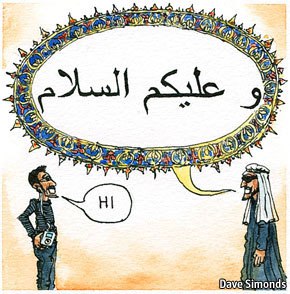
hi
Source

Today we look at two nouns rooted in  Palestinian history 

1948 a

1967 a

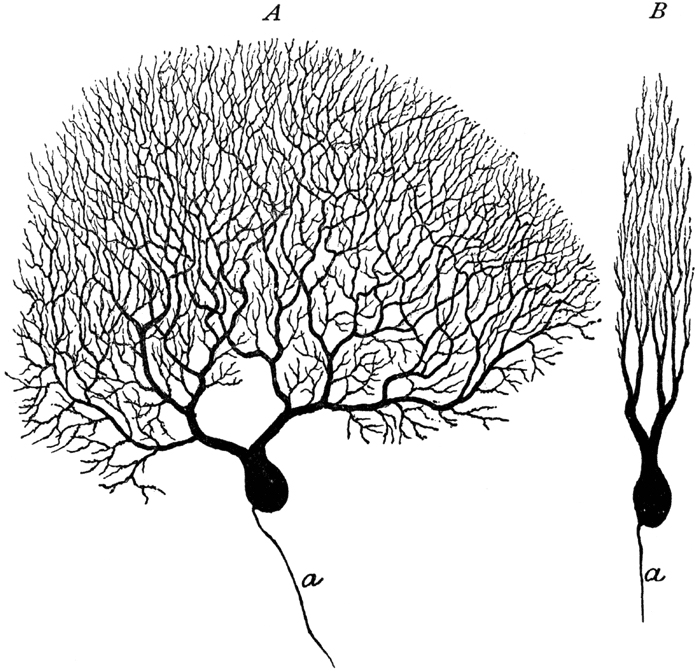
Languages based on a root system are dendritic — consider trees, rivers, fractals..


dendritic
Source

Look at the two letters in blue  b (ب )  s ( س )

But now a word from our sponsor:

On the day of Nakba, 700,000 people were exiled from their ancestral homes.

Andrew Jackson’s illegal exile of the Cherokees began in 1838. Jackson may not have said

“Marshall has made his decision, now let him enforce it,”

but the result was still dispossession.

President Jackson drove the Cherokee Nation into an exile called The Indian Territories until they in turn became Oklahoma. Native Americans now live in rural areas served by Food Desert convenience stores — they get to stay there until a monied interest drops straight edge on a map and calls it an access pipeline, or the equivalent.

We return you to your regularly scheduled program, in progress.

In each case (Trail of Tears, Nakba) people took luggable items, including the house keys. The six days of Naksa happened in 1967 (imprisonment).

nakba_48

Omar Chaaban defines these two  for Sixteen Minutes to Palestine.  I yield the words to Omar:

نكبة

…they chose the word Nakba which, in Arabic, refers to a supreme calamity that happens once in an eon. That is to say, this disastrous collective experience exacted upon the Palestinians is an unprecedented trauma that had to be referred to by a word that communicates to the entire world that nothing can happen that is worse than being uprooted in the manner they were in the events leading to and following Israel’s declaration of statehood.

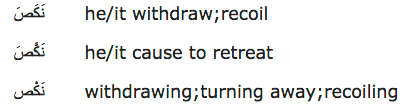
نكسة

…the word Naksa does not really mean ‘setback.’ In classical Arabic, Naksa is used to describe an event where a thing is literally flipped upside down. The great Arabic lexicon Lisan Al-‘Arab — The Tongue of the Arab People — says that when a Naksa happens to a thing, its top becomes its bottom and its front becomes its back. It then goes as far as saying that in many cases a Naksa can be so bad that the chances of it being reversible are almost nonexistent and that no good can be found in it.

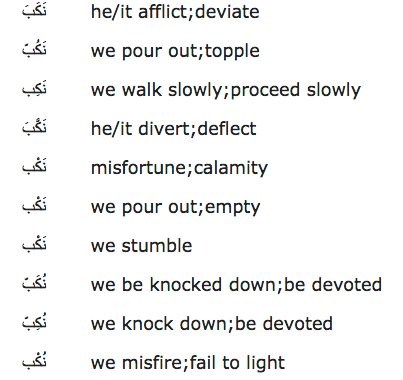
Arabic dictionaries sequence by root. Hans Wehr assembled the definitive dictionary organized by roots. Here are the roots I’ve generated in Aratools

nakba:

nakba

naksa:

screenshot-2017-02-18-10-31-36

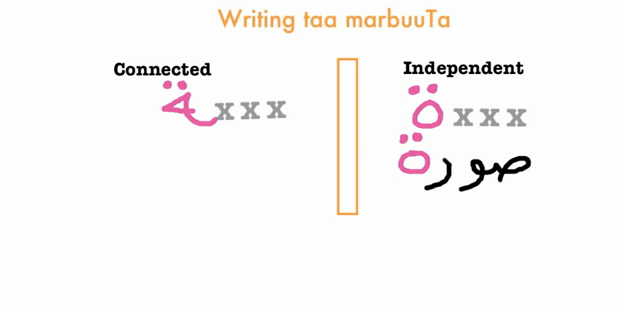
Arabic affixes a special letter to nouns of feminine gender. The grammatical term is “taa marbuta.” It’s also a handy way to create a new word in that language:

Maktab مكتب (office)

Maktaba مكتبة (library)

taa-marbuta
Gender Observations

Coming real soon now: Mental Maps of Palestine


Thanks for reading.