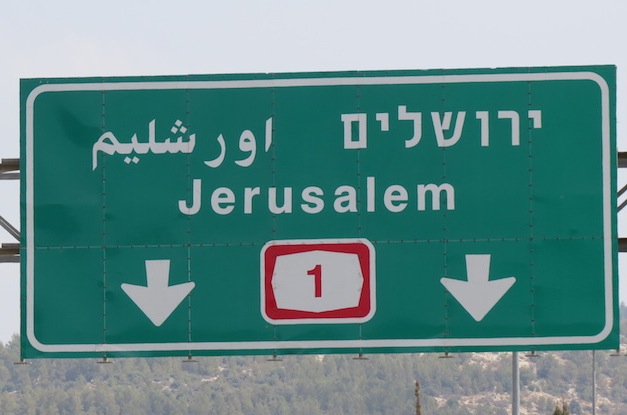
+972 is an independent, blog-based web magazine. Today (22 Nov. 2015) it reports that Israelis are removing Arabic language from signs in Israel.
An Israeli road sign that omits Jerusalem’s Arabic name (‘Al-Quds’), instead using the Hebracized Urshalim.
It’s consistent with other measures taken to effect ethnic purity in the Levant. Traditional hasbara students are educated in a set of arguments that proclaims Palestinians unpersons. I have read handbook-quality materials that seek to “explain” that the first Palestinians came into being on a single day in the 1967 war. It is easier to control a people when that people does not exist.
Arabic does not have a “P” sound in its alphabet, Romance alphabets do; for example, Paris in Arabic language is ‘Baris.’ It would not be phonetically logical to expect to hear the word ‘Palestine’ spoken in Arabic. It makes sense to acknowledge that the English equivalent Philistine begins with an “F” sound. Filistine.
There are efforts to force (or phorce) the history of the Palestinians into a more convenient geography that better serves their argument by employing the logical fallacy of affirming the consequent. It’s a method that has been effective ever since Homo sapiens lived in a land without a people.
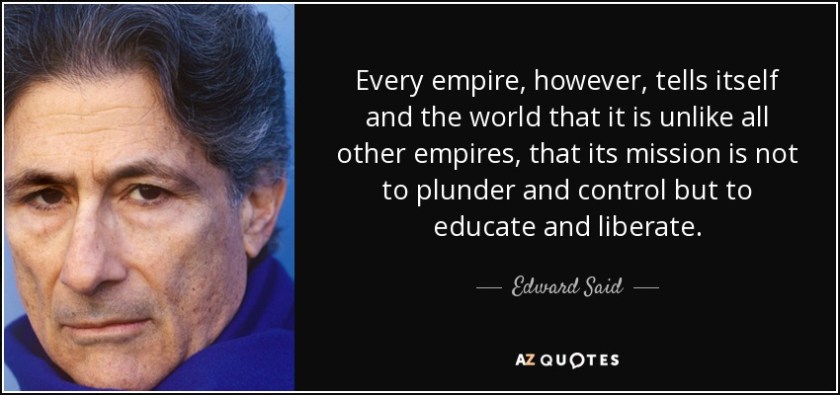
The British Empire efficiently ran their worldwide enterprise by employing a divide and conquer strategy. Sometimes overlooked was their ability to impose the imperial language upon the occupied. The Palestinian scholar Edward Said, in his seminal work Orientalismpublished in 1978 described the dynamic. From his birth he found himself split between cultures, with a juxtaposition of the English name Edward and the common Arabic surname Said. This caused some difficulty in the multicultural multi faith city of Jerusalem. In thought he would begin a sentence in English and end it in Arabic, or vice versa.
The same British Empire used a puppet mechanism for control of The Raj in India. It’s not always wonderful to live in a culture that writes in the language of the conqueror. English has become the principal medium of the written word in Indian literature: English is an unfortunate medium that replaces Hindi, a tongue with deep roots.
Under the British Mandate many worked fiercely to have Hebrew included along with English on public signs, as a signal for their cultural and ethnic identity. The irony of witnessing removal of Arabic on signs is not lost on this author.
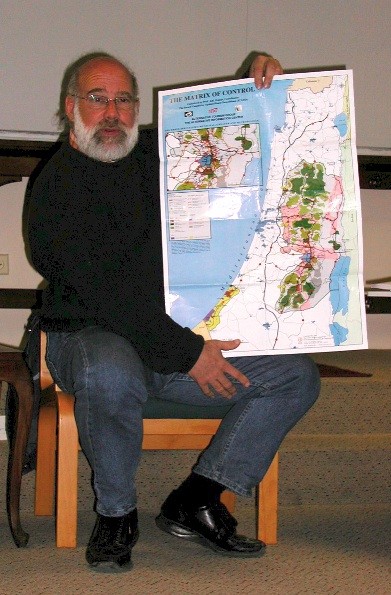
Anthropologist Jeff Halper and the geography of the matrix.
Making the inexplicable explicable, anthropologist Jeff Halper has authored an expression for a phenomenon: The Matrix of Control. I’ve sought to study both sides of the Palestine/Israel conflict; I find Halper’s well documented publications insightful and pertinent. And “The Matrix” is already in our cultural lexicon.
The geography of the occupied territories
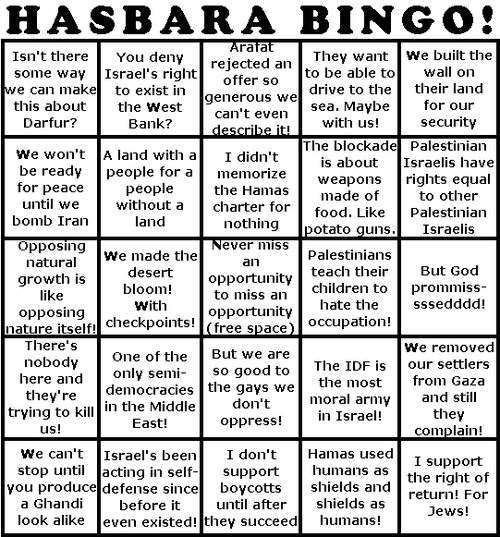
Not for the first time do I refer to hasbara (from the Hebrew “to explain”). WordPress’ auto-correct database is large but hasbara is not yet there).
The following is at the Palestine Poster Project. You’ll find some worthy media. A great project, timeless work:
Multiple cards permitted
Both the Arab and the Jew are semitic. Why limit antisemitism to anti-jew? What then is the word for anti-arab? How about “antisemitism.”
From the blog Displaced Palestinians
Hate speech
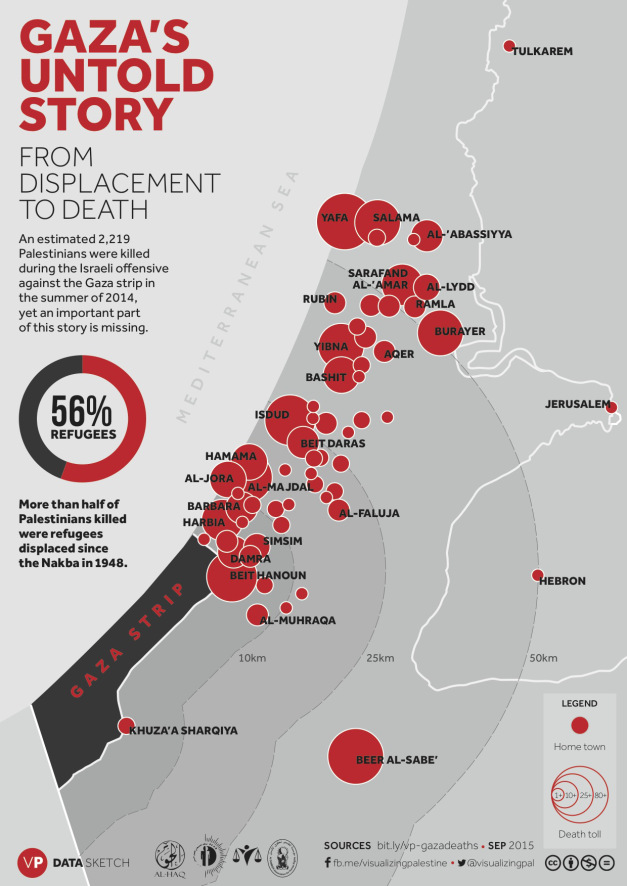
Where did the inhabitants of the world’s largest open-air prison come from?
This infographic visually represents the untold story of Gaza’s refugees. Created by Visualizing Palestine in collaboration with four Palestinian human rights organizations, Al-Haq, the Al Mezan Centre for Human Rights, the Palestine Centre for Human Rights, and Al-Dameer Association for Human Rights, who launched a joint campaign to document Israel’s attacks during the 2014 offensive against the Gaza Strip. http://visualizingpalestine.org/visuals/gaza-refugee-deaths
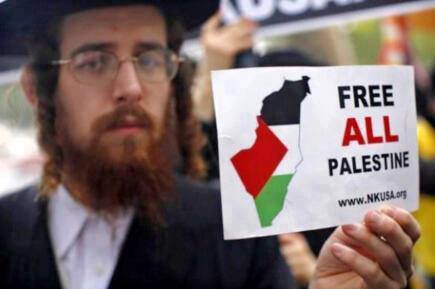
I am a supporter of Palestinian independence and a foe of apartheid: the dramatic separation of “the other” by a privileged people. A de jure and de facto status quo is brutally enforced upon the other. I have followed Palestine and Israel for a long time. I stand on the side of justice and human rights as defined by the United Nations. Palestine is a people whose culture is constantly threatened. Israel enjoys independence, Palestine does not.
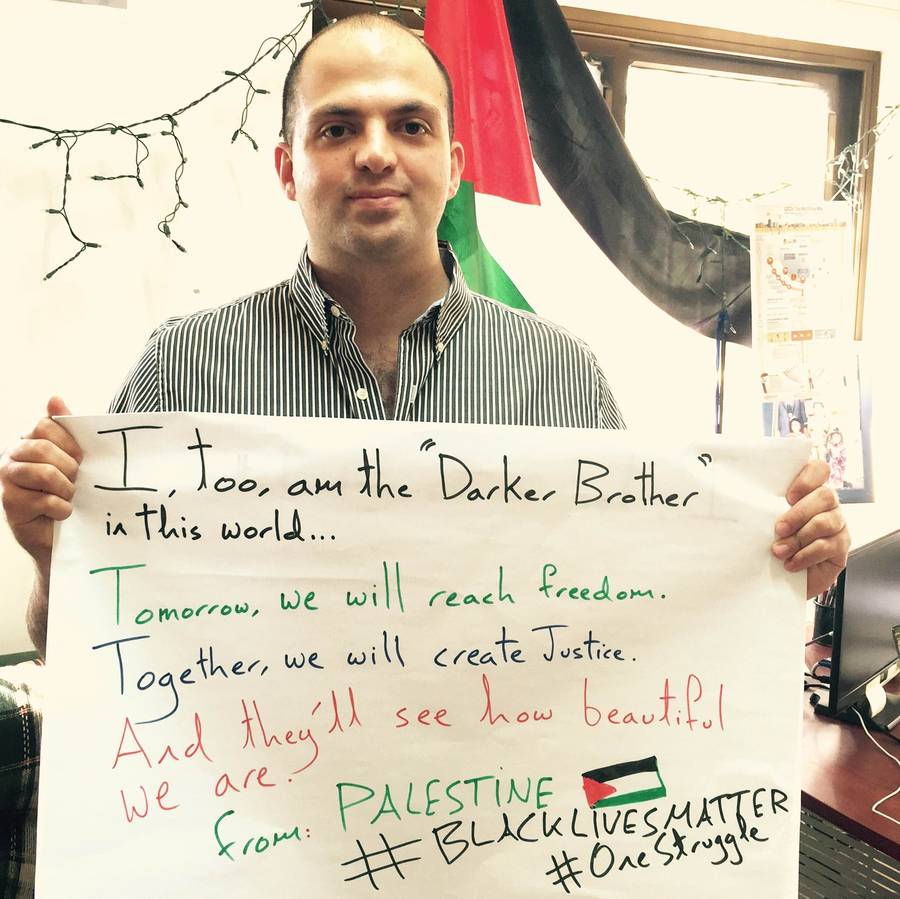
Contemporary movements arise in unexpected ways. They blossom in this era as related hashtags: #OneStruggle
Olive trees are an immortal theme in the land of Palestine.
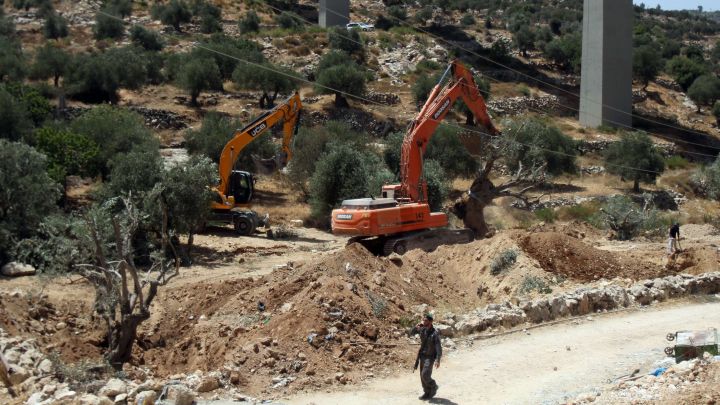
A Palestinian grandmother or mom and her children protecting their olive trees from demolition
Metaphor: olive branch in Genesis 8:11
When the dove returned to him in the evening, there in its beak was a freshly plucked olive leaf! Then Noah knew that the water had receded from the earth.
South Africa was another victim of British Empire. It was divided and conquered. Upon attaining independence from Britain, the State of South Africa adopted the divide and conquer technique. It was called Apartheid.
Apartheid (Afrikaans pronunciation: [ɐˈpartɦɛit]; an Afrikaans word meaning “the state of being apart”, literally “apart-hood”) was a system of racial segregation in South Africa enforced through legislation by the National Party (NP), the governing party from 1948 to 1994.
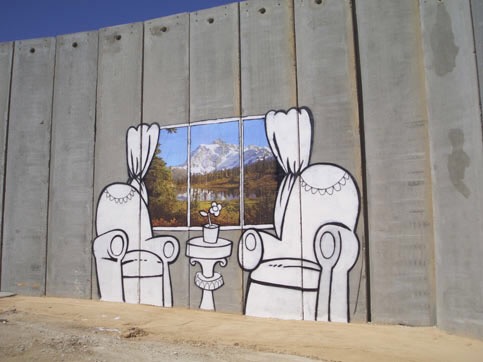
This painting on the separation wall dividing Israeli and Palestinians employs the vehicle (metaphor) of art. Simple but powerful. It reminds me of all the graffiti that adorned the west side of the Berlin Wall (some might have called it the Berlin Fence between 1961 and 1989) until both the west and the east sides of that wall finally fell in 1989.
News item:
The Defense Ministry resumed construction on Monday of the separation barrier near Beit Jala, south of Jerusalem, even though the High Court of Justice had invalidated the building of the barrier in that region and ordered the state to reconsider it.
(August 17, 2015 Haaretz)
India gained its independence from the British Raj in 1947.
British Raj (rāj, lit. “rule” in Hindi) or British India, officially the British Indian Empire, and internationally and contemporaneously, India, is the term used synonymously for the region, the rule, and the period, from 1858 to 1947, of the British Empire on the Indian subcontinent.
The British relinquished their imperial hold on Palestine the following year. In 1948 truth became a victim of war.
There is a worn slogan: “a land without a people for a people without a land.” But Palestine was not an uninhabited region.It was the home of three (3) cultures in 1948: three adherents of a monotheistic faith, secular and others, such as Bedouin nomads.
When the British left the three cultures remained. 700,000 Palestinians began a diaspora (67 years so far) that relocated them to the West Bank of the Jordan River, a small segment along the Mediterranean known as Gaza and throughout the world.
Many Palestinians lived on the Mediterranean coast in 1947. Certainly this would be my choice too, the climate is that of Southern California. Californians prefer the coast, but they also live elsewhere in their state. They live in Sacramento, Los Angeles and San Diego, i.e. all over the state of California. Many Israelis enjoy the Mediterranean coast, but some prefer Jerusalem, a divided city similar to the previously divided Berlin: capital city of the German Democratic Republic and largest city of the German Federal Republic at the time of Nakba.
During the 1947 creation of the state of Israel, the homeland of the Palestinian people for more than a thousand years was taken from them by force. All subsequent crimes–on both sides–inevitably follow from this original injustice. Yet a peace process in the Israeli-Palestinian conflict has continued over the years despite the ongoing violence which has prevailed since the very beginning.
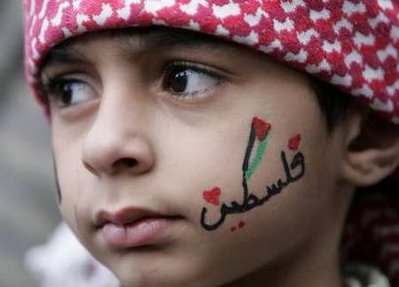
Was the event of 1948النكبةم Nakba Catastrophe) or Israel Independence Day יום העצמאות (Yom Ha’atzmaut)?
Catastrophe number two: the event of 1967: النكسة يوم (The Naksa World Turned Upside Down).
Below, Moriarty as metaphor for the poorly understood victims of great crimes: the Palestinian people:
Picture to yourself the pilot fish with the shark, the jackal with the lion—anything that is insignificant in companionship with what is formidable: not only formidable, Watson, but sinister—in the highest degree sinister. That is where he comes within my purview. ‘You have heard me speak of Professor Moriarty?’
‘The famous scientific criminal, as famous among crooks -‘
‘My blushes, Watson!’ Holmes murmured in a deprecating voice.
‘I was about to say, “as he is unknown to the public”.’
‘A touch! A distinct touch!’ cried Holmes. ‘You are developing a certain unexpected vein of pawky humour, Watson, against which I must learn to guard myself. But in calling Moriarty a criminal you are uttering libel in the eyes of the law…
from A. Conan Doyle’s Sherlock Holmes story The Valley of Fear.
The culture where I live does not seem particularly interested in learning foreign languages. But the written, the spoken, and the audible become a part of the soul and a blessing to humanity when civilized thought can gain a foothold.
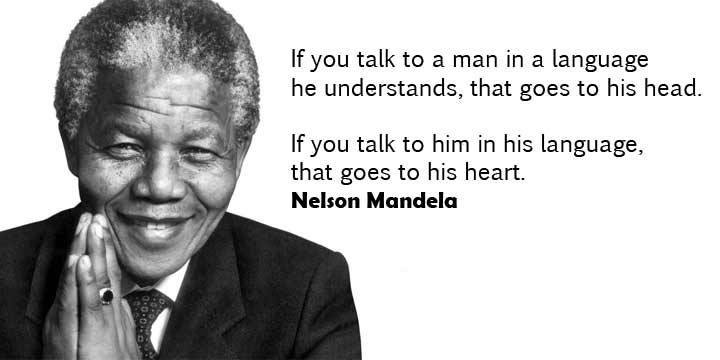
My interest in German language led to an opportunity for study in Giessen, at that time West Germany, from 1971 to 1973. Upon arriving at Justus Liebig Universität I learned German as a second language with fellow students from Iran, Japan, Egypt among others. German was the tongue we shared, so that we could talk to the brain. Then we could join the citIzenry and talk to the heart.
Just be natural! It’s important when learning languages
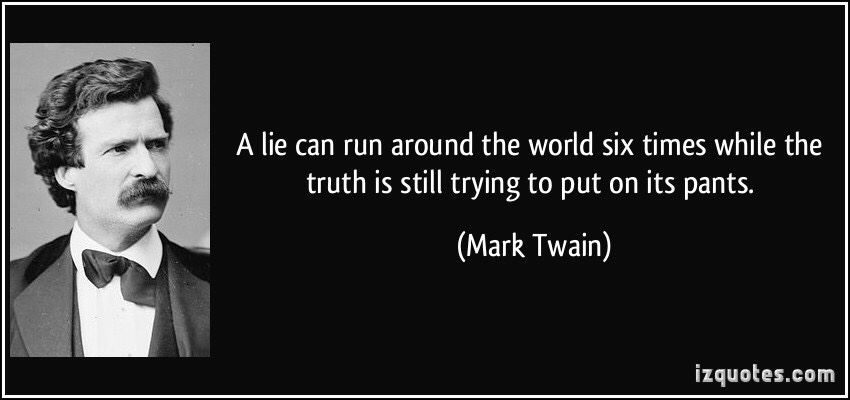
Some people take on an alternate identity to ward off conversation. It was common for Americans traveling in Europe in the early 1970’s to attach a Canadian maple leaf to their person. This to avoid conversations about Vietnam. It was convenient to merge into the background. But such maneuvers may lead to a false sense of comfort: ease and convenience have long-term consequences. It is just as convenient to avoid discussions on long festering Middle East issues today. Are the sound bites you hear from a source without an agenda? Unfortunately, the truth can be hidden, often deliberately by perpetuating lies that simply make life more convenient or comfortable for the liar.
Under Mohammad Reza Pahlavi (Shah from 1941 to 1979) many Iranians studied at German universities such as Justus Liebig. Our Iranian fellows shared an ability to converse in German about Savak and the Persian experience. Neither Farsi nor English was necessary to bridge a gulf separating us from each other. Who knew that Pahlavi was complicit in dark matters. The Iranian people knew.
Imagine a monarchy that is 2500 years old, that began with Cyrus the Great and ended with Mohammad Reza Pahlavi’s deposition. Might a civilization both ancient and modern have evolved a complex history and culture In 2.5 millenia? Might Farsi hint at subtleties in the Persian soul? What about the country name itself: Persia, Iran? Does its religion suggest potential geopolitical significance? Can we question the translation of the colloquial Farsi into English of the conveniently repeated Death to America (More accurately translated as Down with America).
Farsi speakers use this invocation to express transitory frustration, perhaps at stubbing a toe. In a future post I want to discuss the nature of curse words in Farsi, Arabic and Hebrew. Stay tuned.




![Apartheid (Afrikaans pronunciation: [ɐˈpartɦɛit]; an Afrikaans word meaning "the state of being apart", literally "apart-hood") was a system of racial segregation in South Africa enforced through legislation by the National Party (NP), the governing party from 1948 to 1994.](https://billziegler1947.com/wp-content/uploads/2015/08/apartheidsignenglishafrikaans.jpg)




 Posted with Blogsy
 billziegler1947