Hariod Brawn, a fellow I follow regularly on WordPress, recently posted “What is it like for nothing to happen.” Many, including myself, have found great mill for grist there. Please consider spending a moment or five there.
Such thoughts as these intrigue me.
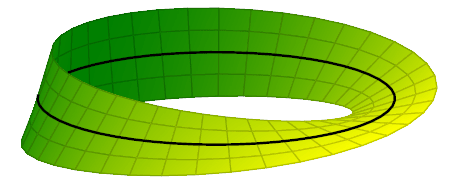
What is the science behind the abrupt discontinuity and surprising continuity of a Möbius strip? You are on one side and simultaneously on the other, or is it the other way around. Or is there just one side? A simple twist of the two-dimensional surface is radical and beautiful to ilk like me.
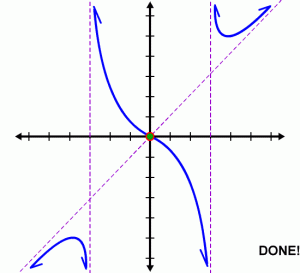
Calculus allows us to keep begging the questions on a seeming, and actual, infinity:
“Are we there yet? When are we going to be there?”
Meanwhile we march on asymptotically toward an axis or several axes, or three-dimensional, four-dimensional axes.
I say “dare to divide by zero.” But thank me not —thank the unknown scholars who introduced the zero. Roman numerals are hard-headed and in-your-face hard-nosed to math fans.
But back to nothing (or zero or zed). Consider the weight of the universe. Then consider its opposite: absolutely absolutely nothing.
“But, but the big-ass weight of the universe is a whole lot of something. Or something.”
Some time ago a science fiction author (name unknown to me) imagined a planet with never dissipating cloud cover. At no time of the day or night could an inhabitant see anything but the underside of endlessly butting together clouds. The sun was a hazy bright spot visible during the day. At night, of course, no stars. What could the inhabitants know of the universe?
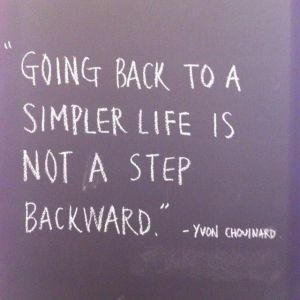
Why think about living life backward into time to witness the hideous carnage left by the politics of certainty.
Chicanery is the lifeblood of politics. It’s the same blood that has flowed through humans since prehistoric differences of opinion formed borders, barriers and fences: sow the seeds of war. Good fences make…
We arrive at understanding through our collective memories found in myth. Mythology is eternally familiar, exposing our baser minds but letting us look at the stars. Unless you’re the one starving in a garret with no skyward window.
Myth is about asking inscrutable questions, the inexplicable is never really inexplicable. Everything is woven along an uninterrupted thread leading from the present-time into unalterable history. Infinite paths may mold the future, but only one path leads to the past. The inscrutable is always scrutable, tension: the certainty of the unexpected.
2016 is another strange leap year in American politics.
I remember 14 presidential elections from leap years 1956 to 2016. Whether mundane or jaw-dropping, they are 20-20 glimpses, but you won’t know that until after the die is long cast.
Fifty years ago I learned about having a wizard for a tutor.
A touchstone work is one you return to throughout your life for the simple reason that its ring is ever true, it illuminates your contrived and contorted life rather than darkening it.
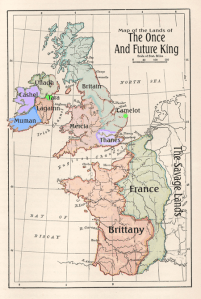
Merlyn had a skill that made him a profoundly wise teacher: the ability to live life from the future into the past. When you live life backward in time you meet the people who live lives forward into the future: you and I. People look to the past for better choices, being raised in different families in different schools.
Were that Franklin Roosevelt had died from his polio in childhood. Reconnect the dots: fractals snap that way, but if you proceed from the future-as-history into the past-as-future?
Alternate histories in science fiction are fractals of life, roads not taken in a panorama of maybes. Setting out one way, becoming derailed or re-railed. Hindsight might be gift or torture.
Let me live my life backward. Let me celebrate my first birthday one year in the past. It would take me from 1947 to 1946. I would become an adult in 1926, the present moment would be in the year 1879.
And the best thing for being sad?
“The best thing for being sad,” replied Merlyn, beginning to puff and blow, “is to learn something. That is the only thing that never fails. You may grow old and trembling in your anatomies, you may lie awake at night listening to the disorder of your veins, you may miss your only love, you may see the world about you devastated by evil lunatics, or know your honour trampled in the sewers of baser minds. There is only one thing for it then–to learn. Learn why the world wags and what wags it. That is the only thing which the mind can never exhaust, never alienate, never be tortured by, never fear or distrust, and never dream of regretting. Learning is the thing for you. Look at what a lot of things there are to learn–pure science, the only purity there is. You can learn astronomy in a lifetime, natural history in three, literature in six. And then, after you have exhausted a milliard lifetimes in biology and medicine and theocriticism and geography and history and economics–why, you can start to make a cartwheel out of the appropriate wood, or spend fifty years learning to begin to learn to beat your adversary at fencing. After that you can start again on mathematics, until it is time to learn to plough.”
(Merlyn, advising the young King Arthur in T. H. White’s The Once and Future King, Berkeley Medallion Edition, July, 1966, page 183.)
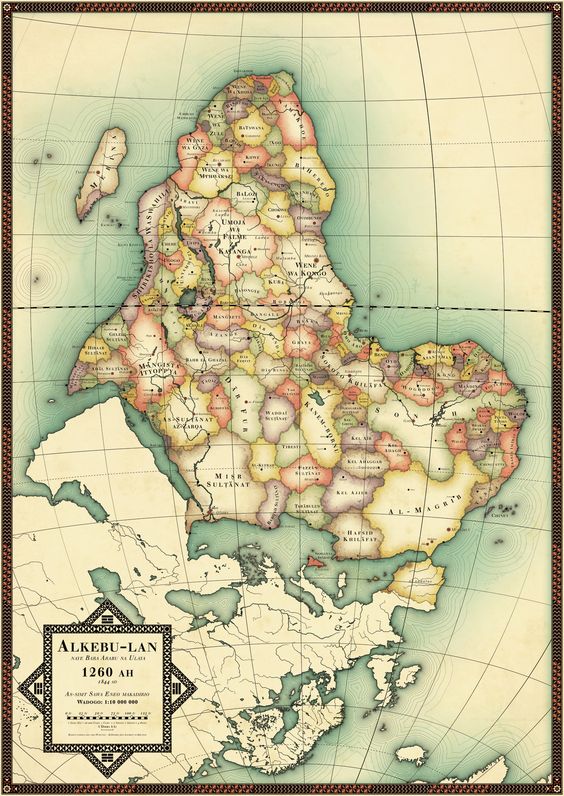
What’s wrong with this map? What’s right? What’s just? Who decides? Who benefits?
Maps are important ways to perpetuate a Big Lie. Here is Africa from a fresh perspective.
Alkebu-lan is Arabic for “Land of the Blacks.” The map above uses familiar color and shading schemes to name the distinct cultures and people. Human geography.
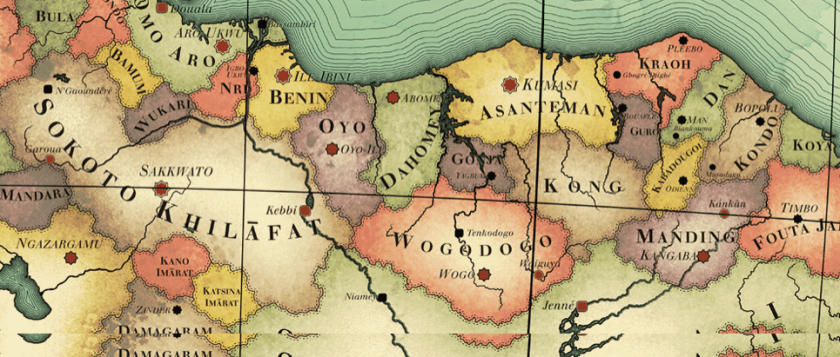
Zoom in and experience the fractal quality of intense diversity:
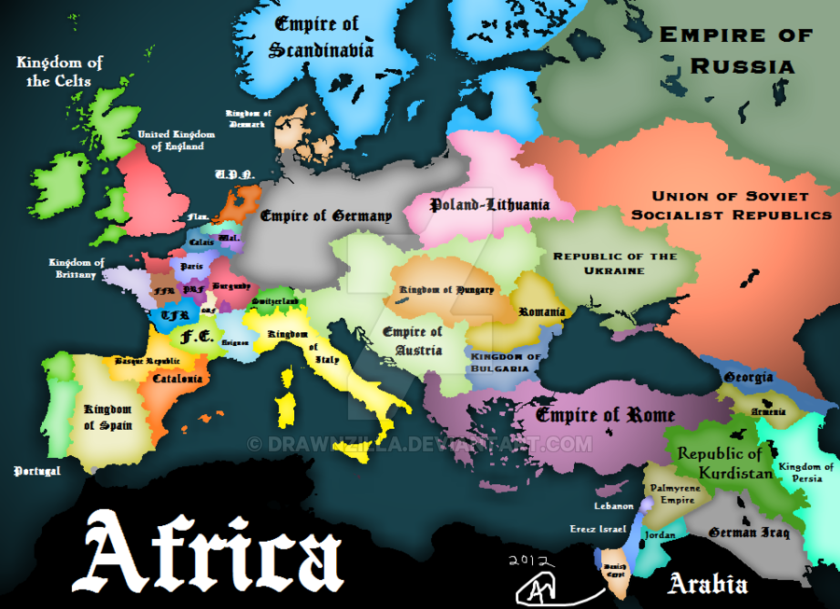
The unlabelled land mass at the bottom is the uninhabited realm of lands depopulated by an extinction level event such as Black Death: an alternate history suggested by Frank Jacobs elucidated here:
A few interesting land areas stand out: places Empire Expanders call Sinai, Levant, Sicily and Spain. Their unexpected presence gives pause.
Please look at this planet from the Other’s perspective, remembering that you too are the “Other.” Call me Ishmael.
The equator is the dashed line. To my eye that great lake in Alkebu-lan looks like a chick’s eye. What a strikingly different way to look at this enormous continent. The solar system doesn’t have a top and bottom, so I can just imagine visitors from another star system mapping the southernmost continent as the top of the third planet out.
The Latin for the interior sea is Mediterranean: the sea at the middle of Earth. It’s natural but unfortunate to look at the world from where you name “us.” It could be New York or the Middle Kingdom (China) or Middle Earth.
Anywhere, really.
America must not remain the center for geopolitical advantage studies.
Imperialism is brutal exploitation of a land and its people: gain without pain for the well armed and the already comfortable.
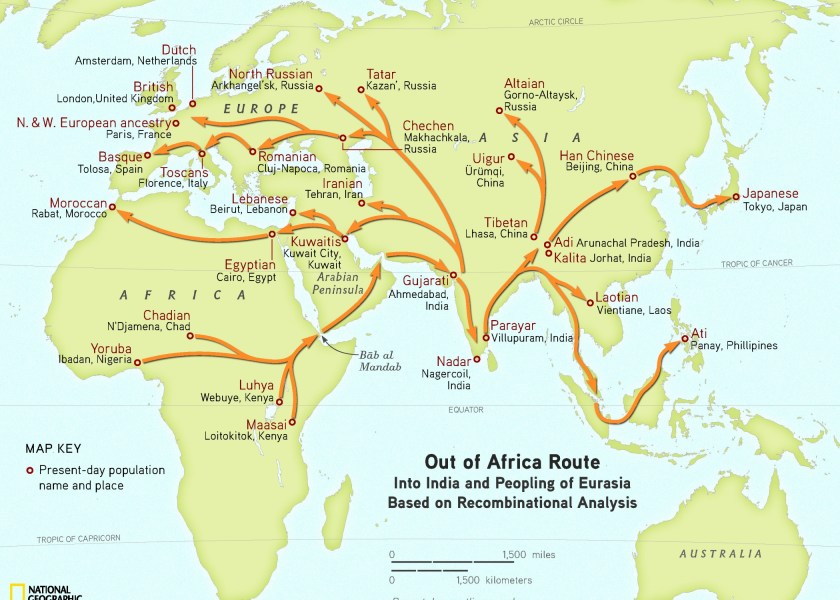
Here are the paths the genomes took.
From IBM recombinational analysis on the human genome. Source.
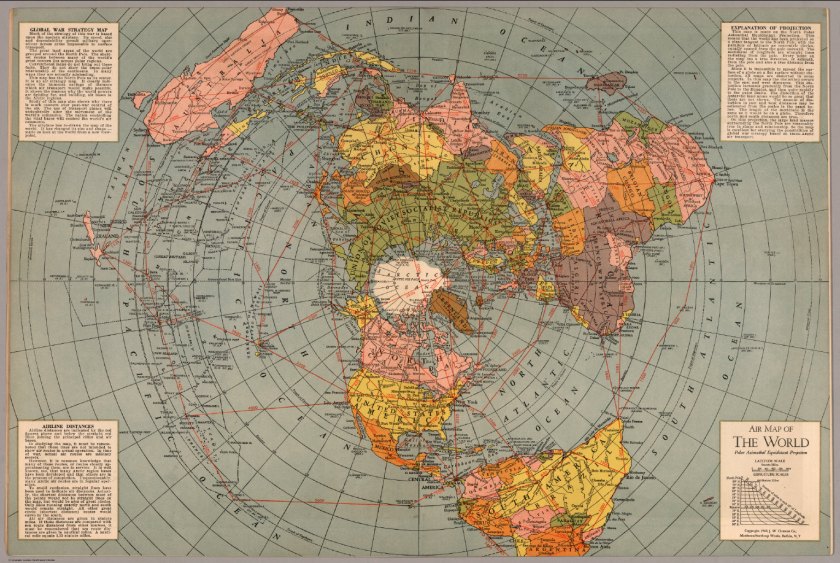
Simply stated, a map projection is a compromise achieved by forcing a sphere in three dimensions onto a two-dimensional surface. Only a globe presents accuracy to scale on behalf of the earth orb, but you can only see one side of the globe at one time. And it doesn’t fit well in your pocket.
When you have looked at the same combination of continents 100,000 times or so, it gradually takes on the ring of “truth.”
Consider the azimuthal equidistant projection for establishing a center point anywhere. It’s the polar opposite (figuratively and literally) of the mercator projection. Mercator places the North Pole at infinity. Azimuthal places Santa’s Workshop at the center of the world.
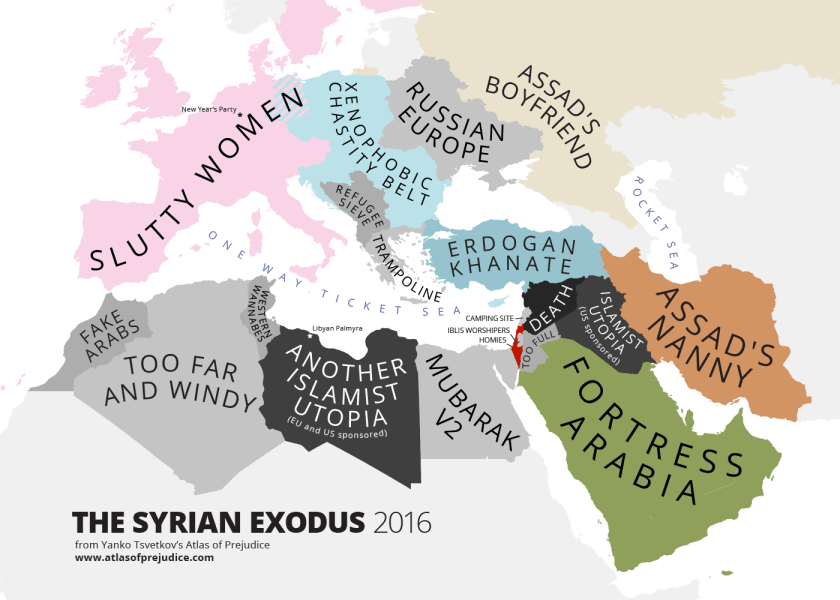
Expect maps to push agendas hard. In 1978 the Palestinian-American scholar Edward Said produced the book Orientalism,in 1978. It explains the way an occupation force imposes its perspective on the occupied: imposition of language and Eurocentric concept of unchangeable truth.
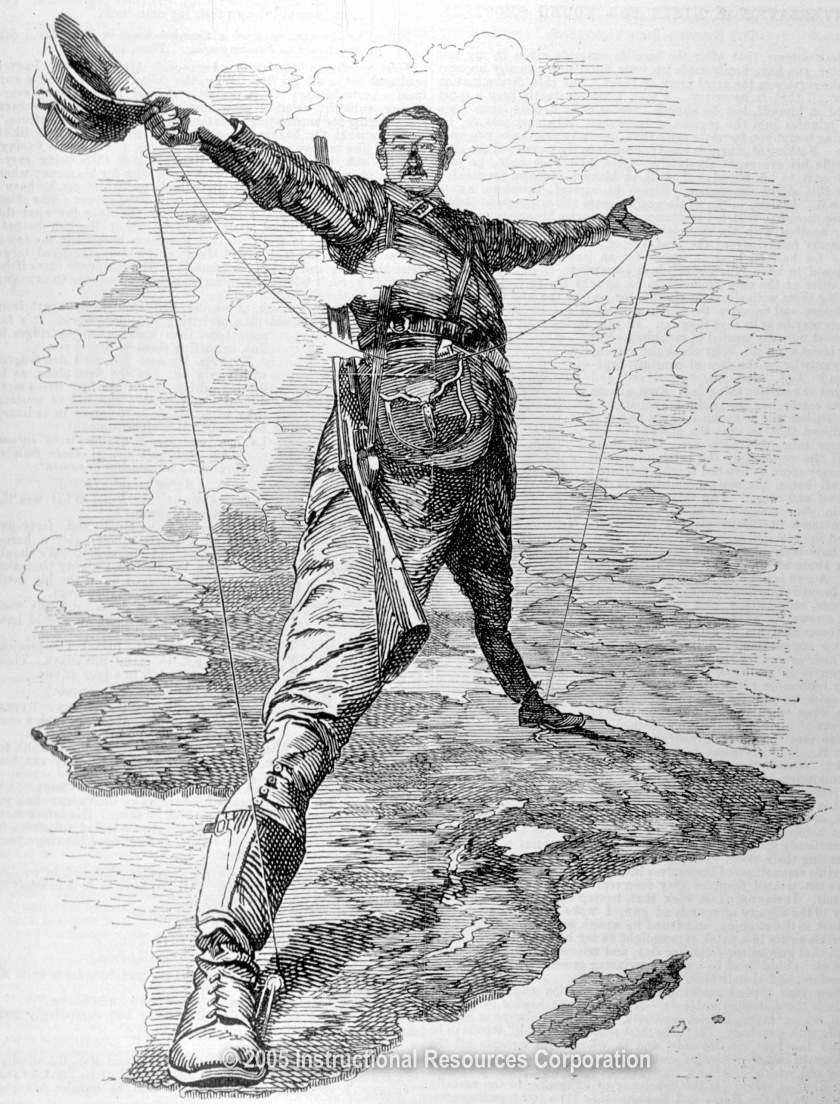
The wide stance of Cecil Rhodes as Colossus of Rhodes in this famous cartoon. Founder of the Rhodes Scholarship fund. Before Zimbabwe there was Rhodesia. Cecil left a legacy.
From Allen Webb, my source for Cecil Rhodes, a quote from gentle Cecil:
We must find new lands from which we can easily obtain raw materials and at the same time exploit the cheap slave labor that is available from the natives of the colonies. The colonies would also provide a dumping ground for the surplus goods produced in our factories.
The British imperial overlords used a straight-edge to define borders for the people they exploited before leaving former colonials to sort it all out. Once they left they didn’t look back. What’s past is passed. Let’s just say ‘we’re history.’
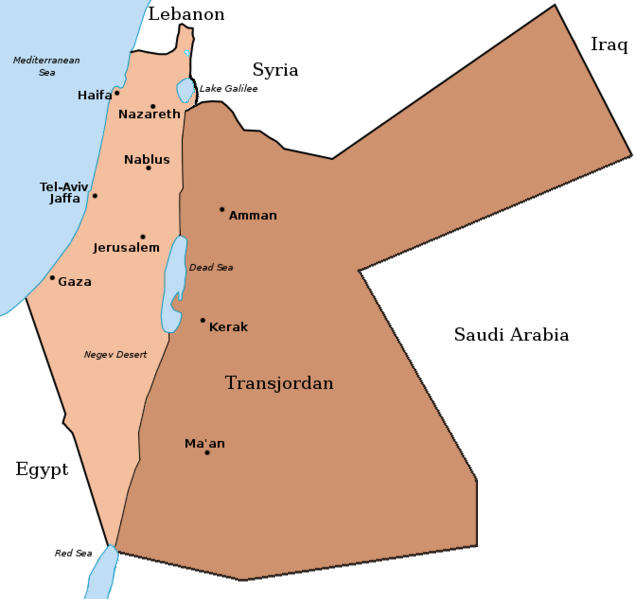
Consider the absurd British decision to create an East and a West Pakistan in the South Asia theater of interest and profit. It’s folly most insane. Lord Balfour had as much insight as the architects of East and West Pakistan when he crafted a 67-word statement in 1917. Nakba is one result. Truth is one casualty.


 billziegler1947
