Inexplicable Discrimination

مرحبا (Hallo),

The word for today’s class is “inexplicable.” Let’s get some قهوة عربية (arabischen Kaffee) and try to understand why news stories should be read with discrimination and not with discrimination.

Hey man, look at this crazy crap. There’s a cow on the news right now and it’s walking down the expressway. Is that like something you’ve ever seen ever? It’s like a North Korean spotted anywhere outside North Korea: an escapee from an authentically horrible place. A possible location of said cow using Google Maps: buildings densely populated by bovines. You are responsible for finding two (2) similarly inexplicable matters.

Doctors make house calls in Cuba, infant mortality is low, education is free, something about literacy rates and a cartoon character. What do my fellow Americans know about Cuba, its culture, its history?

Time for a Google search, exact phrase: “most moral army in the world”. Find a sentence that incorporates all six (6) words. For example, here is one such result from Haaretz (March 3, 2014): “The most moral army in the world fired an anti-tank missile at the house in which a wanted young Palestinian was hiding. The most moral army in the world ran a bulldozer over the top of the house and destroyed it.” I subscribe to Haaretz, so this article may not be available to you. Now, to stay on task, consider usage: inexplicable or explicable.

Class assignment: clip stories from your local newspaper about police officer heroes. Compare to episodes of The Wire. Consult this database maintained continuously and meticulously by The Guardian:

People killed by Police in 2015

You may also view the following video from Australian journalists that might pique your interest and provide examples of the “inexplicable.” It’s 53 minutes long. Remember that my quiz questions may come from anywhere in the video. If you are not a member of this class you do not have to view it. It’s here for its value; however images of gross child mistreatment are always disturbing:

Stone Cold Justice

The following link is provided as extra credit or for students majoring in the Israel-Palestine Conflict (1948 to present):

Electronic Intifada


Honoring the Names of the Dead in Gaza

#GazaNames


Jewish Voice for Peace

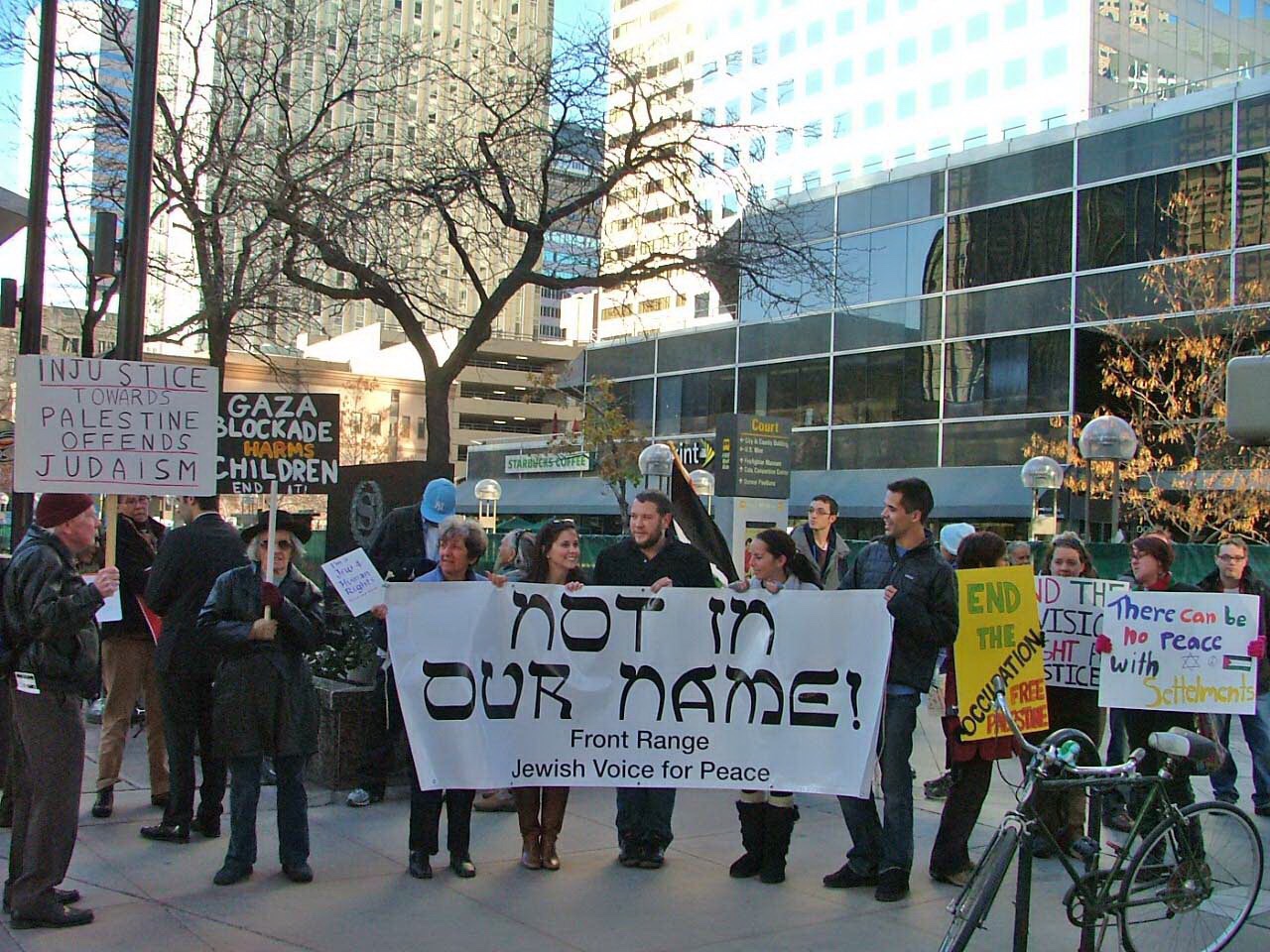
Full disclosure: I am a card-carrying member of Jewish Voice for Peace and a soft-spoken person. I aspire to stand on the side of peace and social justice.  I am also not antisemitic. To repeat, Jewish Voice for Peace consists of Jewish people and their friends and relations. It also does not imply that I question Israel’s right to exist.

Criticism of Israel is an exercise in free speech, it is not antisemitism.

Israel and Palestine: an animated Introduction

I’ve just read an appeal by Rabbi Margaret Holub on behalf of Jewish Voice for Peace: “The Wisdom To Love Well.”

When she talks about JVP she is often countered with questions: What about China in Tibet? Minorities in other Arab countries? Congo?

Rabbi Holub:

“Of course I want justice everywhere. And, also, I care personally and heartfully about Israel and Palestine because I love Judaism and I love Jews. I care about what is being done in our names…Love is not always easy, and the love JVP calls for is a difficult love. I wish it weren’t necessary. But since it is, I am so grateful that there is a Jewish Voice for Peace to provide community, the structure and the wisdom to love well.”

Updated 17 July 2015

Palestine and the state of State Journalism

Many innocent and guilty bystanders in the US now know: wide availability of videos taken with electronic devices has changed the face of modern news reporting. Consider this graphic:

six-major-corporations-control-media


IMG_0567
No. It’s not.

Corporate ownership of media threatens dependable, independent, dispassionate and nonpartisan journalism . Fortunately the internet allows each of us to see cracks in conventional wisdom. An increasingly militarized police does not soothe the downtrodden. Everyone should feel at ease when expressing deeply held beliefs, particularly when those beliefs speak truth to power . Lucas Koerner is an American from Philadelphia who has a close personal stake in Israel and he wanted to express his beliefs when visiting Jerusalem. Then, the unexpected.

Lucas Koerner

I hope to bring such voices into this blog.

Our planet can never have too many eloquent persons. I miss the voice of Edward Said as a thinking person and Palestinian who believed in a one-state solution. Listen to the oppressed. They have tragic tales to relate.

Your Middle East