Today I’m taking you on a field trip to the north and west of Italy, made possible by a friend and fellow blogger— Davide Mana is our host.
Apparently you had to be in Britannia between 1978 and 1981, or you missed the whole thing. So bring along a device that is YouTube capable. If your ears are as bad as mine you might also pack a voice-captioning device that mishears words as often as I do. Allow me to share one word match in the dictionary-database — the verb “trump” rendered as the (proper?) noun “Trump.”
Please bring your hands (or tentacle equivalent) together and welcome the guy who makes this all possible. Join me in welcoming Dr. Mana!
The joys of Youtube.
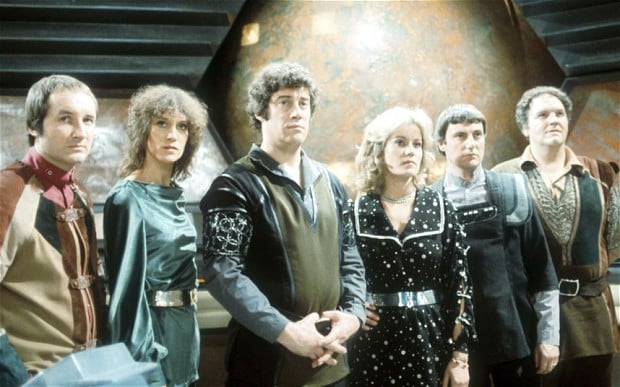
I’ve spent the last few nights watching old episodes of the BBC’s Blake’s 7, a space opera series that aired between 1978 and 1981, and that was never distributed in my country.
And I must say I’m positively impressed.
Because it’s an old show, and produced on a very short and frail shoestring budget, but what the heck, it’s good fun and great storytelling.
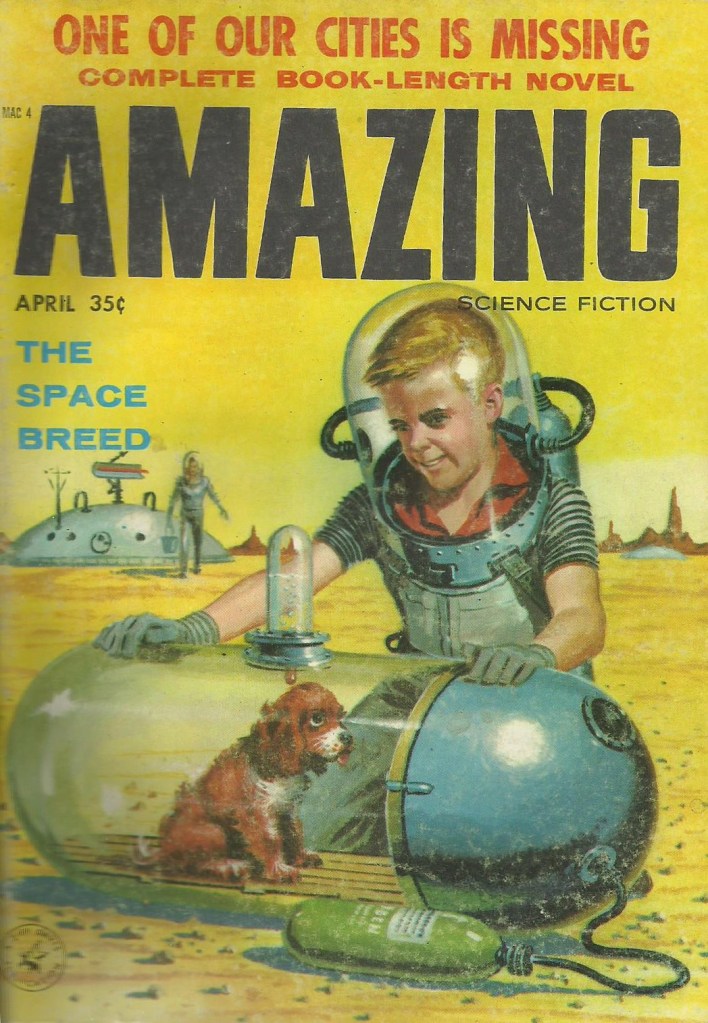
Let us say you are on the way to Mars in 1958. Let’s actually place you in the pilot’s cabin of a spacecraft in a distant future — 1980. Back home at mission control, pipe-smoking scientists and cigar-smoking generals are using the magic of radio — bigger, better, more vacuum tubes.
Meanwhile, other American scientists and generals are helping Japan battle monsters all kind. Godzilla, Gamera. Scientists, generals and the kids and singing miniature friends of Gamera.
A confident team on Earth barks orders. Walls crammed with magnetic-tape driven mechanical brains. What gives with all those dials?
Isn’t it time for you to mention Phillip K. Dick again?
And speaking of analog, your LP, 45 is performing its proverbial broken record role. Time you enter the future of home recording — the reel-to-reel tape deck.
BoingBoing Science Fiction Sunday
There’s a reel or two from my good old 3M Wollensak in the basement, or somewhere. Here is some advice you don’t need — cheap magnetic tape flakes its coating; it had a ferrous smell.
You probably have a large box of vacuum tubes, condensers, capacitors, resistors too.
Yes.
And when I wasn’t trying to make sulphuric acid and release free chlorine gas? See Chemistry 001 for more. What to do? Well, wrap copper wire around an oatmeal box to make a crystal radio, one with an antenna stretching from attic to nearest tree. That there radio pulled in one (1) station. Those were less modern electronic times, the days before a portable radio could contain up to 12 transistors.
We don’t seem to be getting anywhere here. Are you fumbling for a coherent, direct and unambiguous theme, Bill?
No.
You need help, Bill. We hope you’ll get the help you need. Let’s help get you back on task. Didn’t you program a computer in that world of the future? 1980’s.
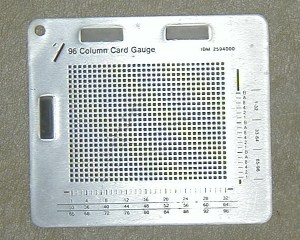
’twas a circuit-board materials plant in Blanchester, Ohio. I still have several 8K boards that were suspended on a rod and inserted into a motherboard. Those 8 boards provided all the memory needed to power a 64K core memory. No old-fashioned 80-column cards for the CIP 2200B. No indeed. 96-column cards were a fraction the size, yet delivered more columns for nifty RPGII program code.
What did the Electronic Circuitboard Materials Division do before becoming ‘computerized’ in that 1980’s distant future?
The order-entry system wrote data on thin bamboo sheets with a paper covering. Perforated strips had columns inscribed with a straight edge and ballpoint pen. The bamboo was flexible; it allowed you to move order data up and down a steel “book” flanged on each side. Those strips traced an order from entry to shipping. When the order shipped you snapped that bamboo and tossed it into a waste can.
Once again, you are allowing your mind to wander. We’re interested in results (and getting you the help you need).
I programmed a database to convert the bamboo modus operandi into electronic databases. We went parallel with the bamboo strips for a month, all went smoothly and moved right along — until competition from Japan arrived in that future 1980’s world. Cutting to the proverbial chase: the plant closed and reopened as a Honda parts facility. I became a single parent of two incredibly wonderful children when my wife died in 1983.
The Japanese no longer had to defeat Godzilla, Gamera and all the other monsters. Nippon had time to become an economic juggernaut.
Where did you go then?
To work on my M.A. in Germanic Languages and Literatures, of course.
Naturally it was. I had until 1993 to meet Lisa online in the advanced bulletin-board system of that more distant future world of the 90’s.
Didn’t you get back into databases when you discovered that classroom management was not your forte, but your greatest weakness?
Yes. Had to do something until Y2K came along without two columns on an 80-column-card. An assumed “19” fostered justifiable fear. Had the 96 column card been available in those 1950’s spaceships — my mind begins to boggle.
An Elephant in the Room is a coherent and valuable resource for vegans who join in solidarity with all sentient beings on this shared planet. We speak a truth that vanquishes denial — one argument at a time.
Look into the eyes of the billions sentenced to death for the crime of being edible, for sating crazy appetites, for sturdy hide, the whim of fashion, for savvy consumers, enterprising marketers and future futures markets.
Examine the banner at the top of this blog. Look into the those five eyes and realize that you gaze into a complex ocular system that arose during the Cambrian explosion. When you look into the eyes of a fellow sentient being you are looking at a fellow soul.
There’s a perception of veganism, and of many vegans too, as vociferous and/or challenging. We’ve all seen comments that go, ‘thank goodness you’re not one of ‘those vegans’ and no doubt this is intended as a compliment by those who are not vegan themselves.
This ‘compliment’ sits alongside a nonvegan perception of themselves as passive, just quietly minding their own business, not wanting to be challenged about their ‘choices’ in the same way that they consider themselves to be tolerant of the ‘choices’ of others.
I’ve seen posts shared humbly, even apologetically by vegans, aware they will be viewed by those who aren’t vegan, knowing that they are likely to be subjected to some form of retaliation for disturbing the tranquillity.
And it occurs to me that although not being vegan is the default state for the vast majority of us, it is VERY far from being a passive…
The synopsis here is that there is a generation of superficial people who are utilising moral concepts as a fashionable tool rather than for any genuine concern; being a vegan is ‘cool’ and thus an image while fraudulently promoting products that is completely anti-animal rights and if not, certainly is lacking in morality such as cosmetic surgery. These same people talk of being an individual and ‘unique’ – a very trick in itself instigated to promote the idea that they have not actually submitted to this ploy – obvious since they are all doing the same thing. That is because they themselves have become a product.
They are reverberating the same tools that has been instilled by marketing and advertising ploys; ‘marketing’ is basically the master indirectly telling the slave that he is ugly – thus making him feel anxious – before convincing him to willingly submit to his enslavement by offering him the opportunity to be relieved of the anxiety. He profits and since the slave becomes willing and thus more productive, the profits become sustainable.
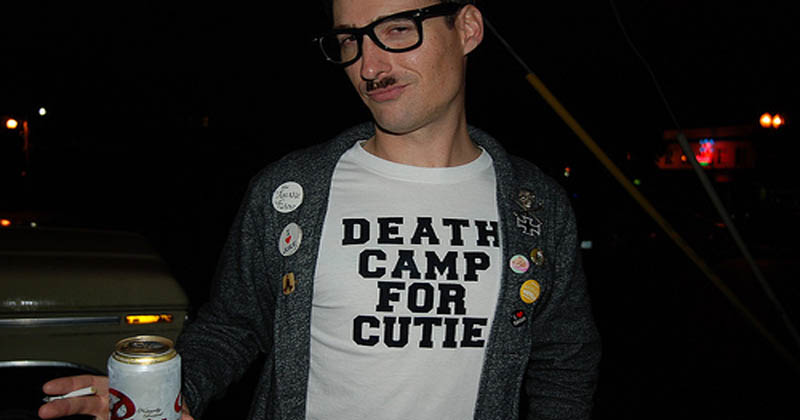
The problem here is, if we have a generation of people who submit to this speciousness, then why would it be presumptuous to assume that they will soon submit to something like neo-Nazism where they too are now utilising an effective method of justifying their hatred through fashionable tools.
The problem here is, if we have a generation of people who submit to this speciousness, then why would it be presumptuous to assume that they will soon submit to something like neo-Nazism where they too are now utilising an effective method of justifying their hatred through fashionable tools.
Con artists do not preface a pitch with the disclaimer: “First, I must tell you that I am a con artist.”




 There’s a perception of veganism, and of many vegans too, as vociferous and/or challenging. We’ve all seen comments that go, ‘thank goodness you’re not one of ‘those vegans’ and no doubt this is intended as a compliment by those who are not vegan themselves.

 billziegler1947