Tolstoy, Schumacher, Climate Change & Veganism

Personal integrity requires living ethically. Climate change threatens the livability of this planet for countless species. Veganism is not Shmeeganism.
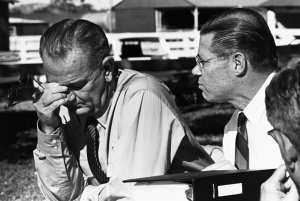
knee.deep.in.the.big.muddy

Pete Seeger let us know where we stand politically! I call it a metaphor for this election year and a perspective from the Smothers Brothers Show in 1967. I had a Pat Paulsen bumper sticker on my ’63 Corvair in 1968.

Waist deep in the Big Muddy

And the big fool says to push on!

Veganism is still a minority constituent of the body politic. But it’s good idea to stand on the side of truth.

Throwing a snowball on the Senate floor is as helpful for understanding the significance of two (2) Celsius degrees as an answer from genesis by ken ham.

Meanwhile Steve Inskeep throws softballs on NPR. Disclosure: Inskeep has been in my craw since replacing the inimitable Bob Edwards on Morning Edition. Just saying.

Celebrating ignorance and arrogance is exceptionally American. Global economies based on the trillion-dollar solutions of fossil-fuels, slave-labor, misogyny, ultra high-tech weapon systems and private prisons drive critical thinkers into exile. Intentionally.

Gross is our domestic product. Strength is our ignorance.

I sit on a man’s back, choking him, and making him carry me, and yet assure myself and others that I am very sorry for him and wish to ease his lot by any means possible, except getting off his back.

Leo Tolstoy had his pulse on humanity. Select anything he wrote and discover splendid presence and prescience, including veganism and anarchism. Quotes
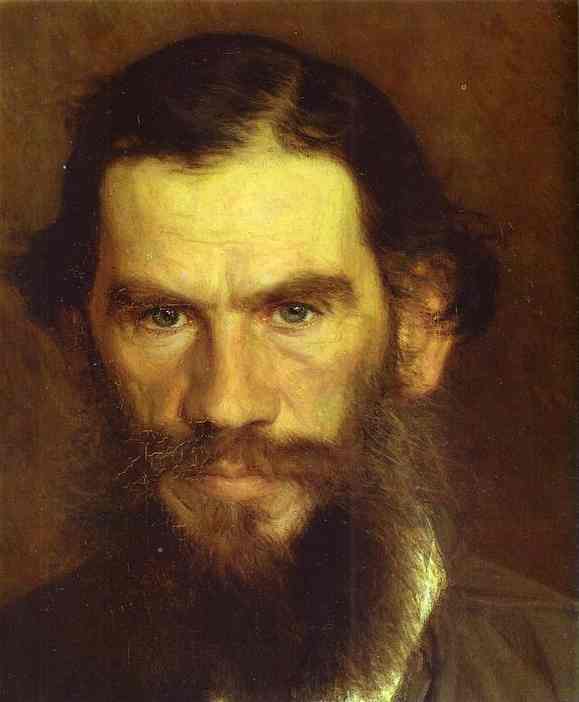
leotolstoy

The Long Failure of Western Arms

  • Tolstoy: Writings on Civil Disobedience and Nonviolence (1886)

Yes. If it’s a good idea Tolstoy wrote about it from 1828 to 1910. He stopped writing by dint of death: a century plus six years.  

E.F. Schumacher offered the planet some important advice in 1973, roundly and soundly dismissed at the time, but I sense a resurgence, at least a spirit of hope.

From Globalisation for the Common Good Initiative, a perspective on E.F.
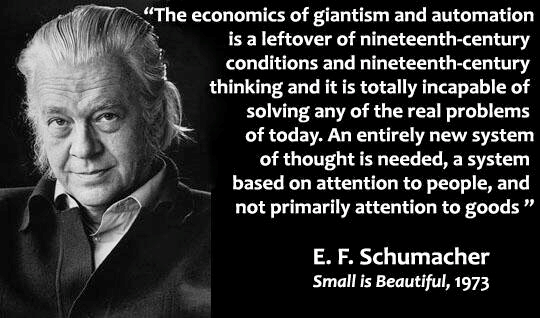
2016efschumacher3

Thanks for reading.

Epictetus 55 – 135 C.E.

I mentioned touchstones in a previous post, I now touch another one: Epictetus, usually noted as a stoic philosopher. But that is a bit procrustean; there is much room for subtlety here. I am directing your attention to Epictetus’ timeless contribution to a more civil society. Those familiar with the serenity prayer will find a beacon. Blaze an internet trail for more.


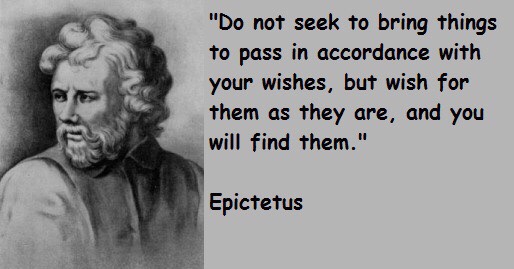
Do not seek to bring things to pass in accordance with your wishes, but wish for them as they are, and you will find them.


He is a wise man who does not grieve for the things which he has not, but rejoices for those which he has.


If thy brother wrongs thee, remember not so much his wrong-doing, but more than ever that he is thy brother.


The essence of philosophy is that a man should so live that his happiness shall depend as little as possible on external things.


There is only one way to happiness and that is to cease worrying about things which are beyond the power of our will.


To accuse others for one’s own misfortunes is a sign of want of education. To accuse oneself shows that one’s education has begun. To accuse neither oneself nor others shows that one’s education is complete.


We have two ears and one mouth so that we can listen twice as much as we speak.


Nice People Explained: Bertrand Russel

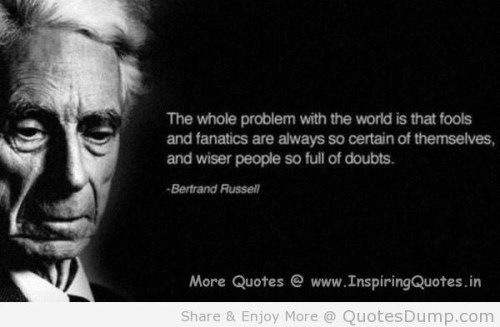
I first read Bertrand Russell’s essay collection Why I am not a Christian In the early 70’s. One essay that affected me in particular, and that still intrigues me is Russell’s “Nice People.”

Skeptics Guide to the Universe Forum excerpt:

— Quote from: “Mike Foster” —I’ve been reading Why I Am Not A Christian, And Other Essays by Bertrand Russell. In it, he launches a fairly sarcastic – even scathing – attack on ‘nice people’ in a c1931 essay called . . .’Nice People’! He talks about people who think they are nice as often indirectly selfish, unappreciative, aloof, deceptive and inclined to exercise power indirectly through gossip etc.

It’s been a few years since this essay was published, but I am quite humbled at its timeliness. A great touchstone indeed.

Bertrand Russell

“Nice People” rather reminds me of Jonathan Swift’s bombastic apologist in Gulliver’s Travels. Swift’s finely pompous character is merrily describing the land of his birth. His pride at its prowess is figuratively exceptional: sufficient to pop his vest buttons, had he been wearing a vest. Let’s imagine they are gold buttons to polish the metaphor. So he extols the virtue of his beloved British Empire at considerable length. Russell waits, as did Swift, until the very end of his writing before telling us the salient distinguishing feature of these very nicely described Nice People. Unfortunately, they have nasty minds.

Thanks for reading.

Me and the Grandmas of Baghdad

Me and the Grandmas
Martha Stephens’ New Book

Martha Stephens has presented us a gift: Me and the Grandmas of Baghdad. March 2015 from Peace Works Publishing. I am conflicted when approaching Amazon.com due to their treatment of workers, but I patronize Amazon for their community rewards, and I like their look inside feature. After looking inside you can learn about Martha’s other trail-blazing books and read reviews. The Grandmas includes “a garden of hope and repose.” Here you meet fellow denizens of an old golf path, sapiens and otherwise as the memoir taps wars of the writer’s childhood past and shows her compassion for victims of perpetual war. She gives the victims a voice. We are all complicit in this business, and yes it is a business. Then Martha returns to a regard for magnificent teachers who sustain us.

Kindle tells me that I have now read 40%: 60% remain to read, so I jump back in…”Shelley was returning the next day to Cold Spring, Kentucky, so we caught just that one glimpse…” Part II when Kindle tells me 0% remaining.

(Edited June 27 17:00)